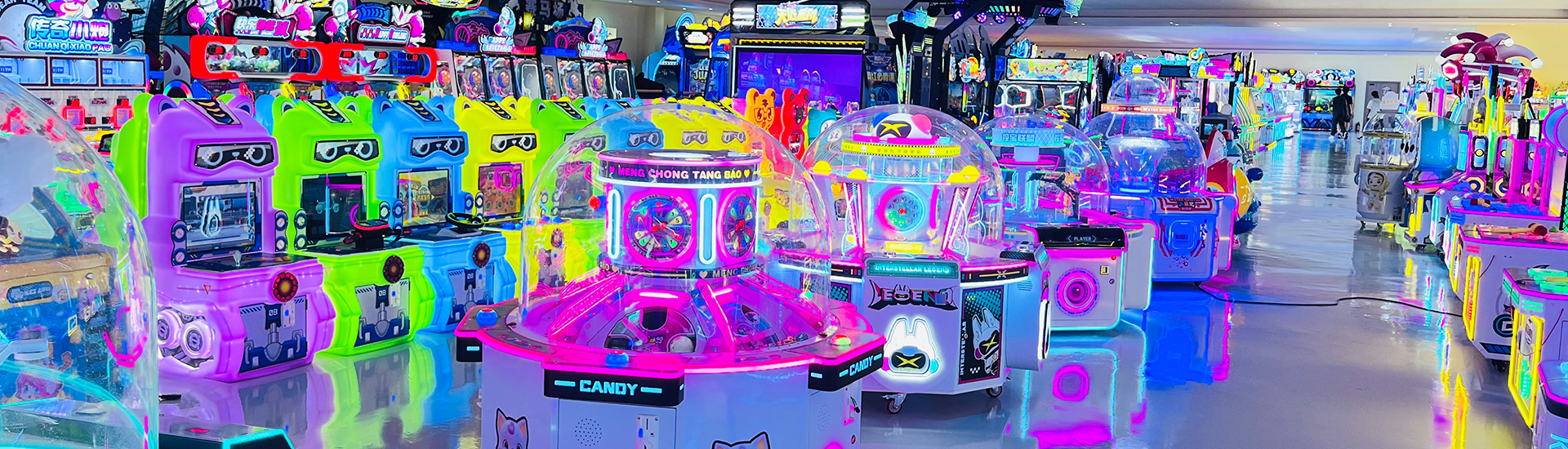
Small amusement facilities, serving as core venues for children's daily entertainment, physical development, and social interaction, are widely distributed in various public places such as parks, communities, shopping malls, and schools.
However, with the increasing variety of facilities and their increasingly complex combinations, safety risks and hidden dangers have also become more prominent, such as excessive levels of harmful substances in materials, insufficient structural strength, and inadequate emergency measures. Recently, the State Administration for Market Regulation released the mandatory national standard "Safety Specifications for Small Amusement Facilities" (GB 34272—2025). What are the changes in the new standard? In what aspects have new revisions been made?
1. Strengthen safety protection design and improve intrinsic safety level.
The new standard further improves and enhances head and neck pinch protection, body pinch protection, finger pinch protection, and entanglement protection, and clarifies the pinch gap value; optimizes the relevant requirements for facility surfaces and protrusions to eliminate the risk of scratches caused by sharp edges; adds requirements for anti-climb design and anti-water accumulation design, and standardizes the test methods.
2. Strengthen material safety management and solidify the bottom line of health protection.
Given the high frequency of skin contact with children and their tendency to bite, the new standard further refines the control requirements for harmful substances. For example, it expands the scope of lead content control from "coating level" to "total lead content of materials," achieving comprehensive coverage of various substrates such as plastics and metals; it expands the phthalate content limit to cover all flexible parts that come into direct contact with children's skin; and it adds mandatory requirements for formaldehyde emission from engineered wood products, while specifying the exact testing methods.
3. Conduct thorough structural calculations for tall equipment to prevent collapse accidents.
In response to the trend of "taller and larger" development of small amusement facilities, the new standard requires that facilities with a platform height of more than 3 meters should undergo comprehensive structural stress calculations, focusing on verifying core indicators such as static strength, fatigue strength, stiffness, and stability. At the same time, it strengthens the verification under extreme working conditions to ensure that the facilities can maintain structural stability under various working conditions and eliminate the risk of collapse from the design stage.
4. Improve emergency evacuation requirements and enhance the ability to handle emergencies.
For enclosed spaces such as indoor playgrounds and large combination facilities, the new standard clearly stipulates that enclosed play areas should have no fewer than two entrances and exits, and specifies the dimensions of emergency evacuation routes, providing space guarantees for the rapid evacuation of children and rescue by staff in emergency situations.
5. Refine maintenance and management requirements and implement main responsibilities.
To address the common problem of "heavy use, light maintenance" in small amusement facilities, the new standard has refined the maintenance instructions, clarifying detailed regulations on daily inspection and maintenance requirements, operating procedures, emergency rescue, vulnerable parts, safety signs, and amusement guidelines. The "Safety Specifications for Small Amusement Facilities" (GB 34272—2025) will officially come into effect on May 1, 2026.